
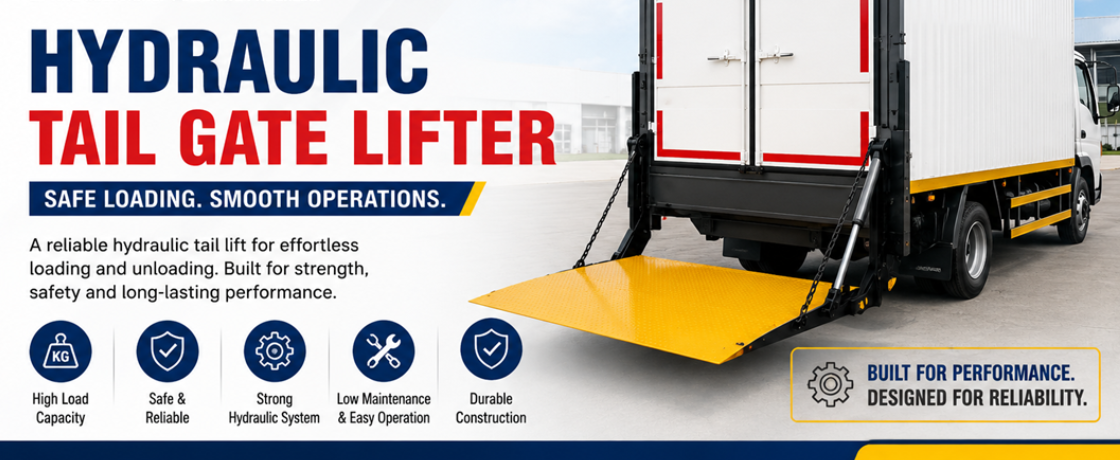
Jyoti Hydraulic develops reliable hydraulic lifting and tipping solutions for pickup trucks and commercial vehicles used across Indian industries. Whether a business needs a Hydraulic Tail Gate Lifter for handling heavy packaged goods or a Bolero and Pickup Hydraulic Tipper Jack for unloading bulk material, the right system can reduce manual effort, shorten turnaround time and improve overall vehicle productivity.
Introduction
Pickup trucks and light commercial vehicles are widely used for transporting goods in agriculture, construction, logistics, manufacturing, waste collection and local distribution. Although these vehicles are easy to operate in cities, villages and narrow industrial areas, loading and unloading heavy material often remains difficult.
Manual unloading takes time, requires extra workers and may damage the cargo. Hydraulic systems solve this problem by using controlled mechanical force to lift goods or tilt the vehicle body. They are especially valuable where forklifts, loading docks or cranes are not available.
Growing Use of Vehicle-Mounted Hydraulic Systems
Indian businesses are increasingly looking for vehicles that can do more than simply transport goods. A pickup truck fitted with a hydraulic system can also perform its own loading or unloading operation.
A Hydraulic Tail Gate Lifter is commonly used for machinery, appliances, drums, cartons, industrial components and other heavy items. A hydraulic tipper jack is more suitable for sand, soil, agricultural produce, construction waste and loose material.
This difference is important. A tail lift moves cargo vertically between the ground and vehicle floor, while a tipper system raises the complete cargo body so that material slides out under gravity.
How a Hydraulic Tail Gate Lifter Works
A Hydraulic Tail Gate Lifter consists of a lifting platform, hydraulic cylinders, power pack, structural frame, hoses, valves and operating controls. The power pack pumps pressurised hydraulic oil into the cylinders, creating the force required to raise or lower the platform.
The operator places the load on the platform at ground level and activates the system. The platform then moves to the height of the vehicle bed, allowing the cargo to be transferred safely inside.
Performance depends on more than the stated lifting capacity. Load position is equally important. A heavy object placed near the outer edge of the platform creates greater stress than the same load placed close to the vehicle.
Platform size, load centre, hydraulic pressure, vehicle battery condition and structural mounting must therefore be evaluated before installation.
Technical Working of a Pickup Tipper Jack
A Bolero and Pickup Hydraulic Tipper Jack raises the cargo body around a rear hinge point. As the body reaches the required angle, loose material moves towards the rear and is discharged.
The lifting force is generated by a hydraulic cylinder connected between the vehicle subframe and tipping body. However, selecting a cylinder only by tonnage can lead to poor performance.
Cylinder stroke, bore size, mounting angle and lifting geometry determine how effectively the body rises. The initial stage of tipping generally requires the highest force because the cylinder operates at a less favourable angle.
A properly designed system must also consider:
- Vehicle payload and chassis strength
- Cargo body weight and dimensions
- Hinge location
- Required tipping angle
- Hydraulic pressure
- Centre of gravity
- Ground stability during unloading
Incorrect mounting may overload the cylinder, damage the vehicle frame or create an unsafe tipping condition.
Major Applications
Hydraulic tail lifts are useful for:
- Logistics and last-mile delivery vehicles
- Industrial machinery transportation
- Appliance and furniture delivery
- Warehouse distribution
- Gas cylinders, drums and packaged goods
- Equipment rental and service vehicles
Hydraulic tipper jacks are commonly used in:
- Agriculture and farming
- Construction material transportation
- Landscaping and soil movement
- Municipal waste collection
- Scrap and debris handling
- Sand, gravel and bulk material delivery
Benefits of Hydraulic Lifting and Tipping Systems
The main benefit is reduced manual handling. Heavy goods can be moved with fewer workers, helping businesses improve productivity and reduce physical strain.
Hydraulic systems also make unloading faster. A pickup carrying loose material can discharge it within minutes instead of requiring workers to remove the load manually.
Controlled hydraulic movement may also protect valuable cargo from sudden drops or rough handling. For fleet owners, faster loading and unloading can improve the number of trips completed during a working day.
Vehicle-mounted systems are particularly valuable in remote locations where external lifting equipment is unavailable.
How to Select the Right System
Start by identifying the cargo type. Choose a Hydraulic Tail Gate Lifter for individual heavy items that must be raised or lowered. Select a tipper jack when the load can be discharged by tilting the cargo body.
Next, consider the maximum operating load. The system should have a reasonable safety margin, but excessive capacity can add unnecessary weight and cost.
Vehicle compatibility is equally important. Chassis design, available mounting space, rear overhang, suspension, battery capacity and payload rating should be checked before installation.
For tail lifts, verify the platform dimensions and load-centre rating. For tipper systems, evaluate cylinder geometry, tipping angle, subframe strength and body balance.
Component quality should not be ignored. Hydraulic cylinders, pumps, seals, hoses, valves and electrical connections must withstand regular commercial use.
Maintenance and Safe Operation
Hydraulic systems should be inspected regularly for oil leakage, damaged hoses, loose fittings and irregular cylinder movement. Hydraulic oil must remain clean and at the recommended level.
Operators should never exceed the rated capacity. Loads must be distributed correctly, and tail-lift platforms should not be used on unstable ground.
During tipping, the vehicle should remain on firm and level ground. Uneven loading or soft ground can affect vehicle stability as the body rises.
Preventive maintenance improves reliability and reduces the risk of unexpected downtime.
Future of Hydraulic Commercial Vehicle Equipment
Demand for customised hydraulic vehicle solutions is expected to grow as businesses focus on faster deliveries and lower labour dependency. Future systems may feature lighter structures, energy-efficient power packs, improved safety controls and better compatibility with electric commercial vehicles.
Application-specific engineering will remain important because different vehicles, loads and operating conditions require different hydraulic configurations.
Conclusion
A well-designed Hydraulic Tail Gate Lifter can make heavy cargo handling safer and more efficient. Similarly, a Bolero and Pickup Hydraulic Tipper Jack can convert a standard pickup into a practical self-unloading vehicle.
The best results come from selecting a system according to cargo type, vehicle structure, load capacity and operating conditions. Proper installation and routine maintenance are equally important for safe, long-term performance.
Frequently Asked Questions
What is a Hydraulic Tail Gate Lifter?
It is a hydraulically operated rear platform that moves goods between ground level and the loading floor of a commercial vehicle.
Can a tail lift be installed on every pickup?
Not always. Installation depends on the vehicle chassis, payload, available space, rear design and structural strength.
What is a pickup hydraulic tipper jack used for?
It raises the cargo body to unload sand, soil, agricultural produce, waste, debris and other loose materials.
Is a tail lift different from a tipper?
Yes. A tail lift raises cargo on a platform, while a tipper lifts the entire cargo body.
How should hydraulic capacity be selected?
Capacity should be selected according to the maximum load, load position, vehicle design, duty cycle and required safety margin.
Does a hydraulic system require regular maintenance?
Yes. Oil level, hoses, seals, cylinders, electrical wiring, fittings and mounting points should be checked regularly.
Get the Right Hydraulic Solution for Your Vehicle
Contact Jyoti Hydraulic for a suitable Hydraulic Tail Gate Lifter or Bolero and Pickup Hydraulic Tipper Jack designed according to your vehicle and application.
Request a quotation or speak with an expert for technical consultation.
📞 +91 9541424317


